What Are Research Peptides?
What Are Research Peptides?
An introduction to laboratory-grade peptides, their structure, synthesis, and role in scientific investigation.
Research peptides are short chains of amino acids that serve as building blocks for proteins. In laboratory settings, peptides are widely studied for their structural, biochemical, and signaling properties.
Research peptides are synthetic compounds developed specifically for laboratory and scientific investigation. They are supplied for controlled research environments and are not approved for human consumption.
Understanding Peptides at a Molecular Level
A peptide consists of two or more amino acids linked together by peptide bonds. While proteins may contain hundreds or thousands of amino acids, peptides are shorter sequences.
Because of their size and structure, peptides are frequently used in:
Molecular biology research
Biochemical signaling studies
Receptor binding investigations
Structural protein analysis
Preclinical laboratory models
Their ability to interact with biological pathways makes them useful in controlled research environments.
How Research Peptides Are Synthesized
Most research peptides are created using a process known as solid-phase peptide synthesis (SPPS). This method allows precise control over amino acid sequencing, resulting in highly specific peptide chains.
After synthesis, peptides are typically:
Purified using HPLC (High-Performance Liquid Chromatography)
Analyzed for purity percentage
Verified through mass spectrometry
Lyophilized (freeze-dried) for stability
High-purity peptides are essential in laboratory research to ensure consistency and reproducibility.
What Does “Research Use Only” Mean?
When labeled “For Research Use Only,” it means:
The product is intended strictly for laboratory investigation
It is not approved for human consumption
It is not intended for diagnostic or therapeutic use
It must be handled by qualified professionals in research settings
Research peptides are supplied to support scientific exploration and controlled laboratory work.
Why Purity Matters in Laboratory Research
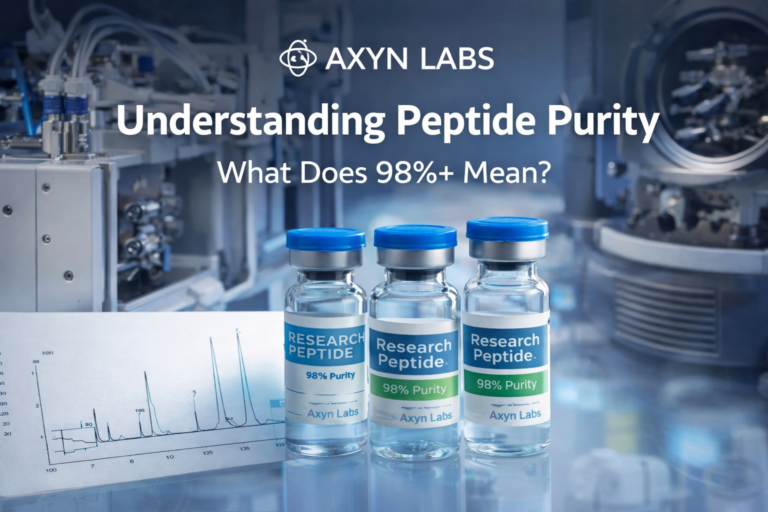
Purity levels (often 98% or higher) indicate the percentage of the desired peptide sequence relative to impurities or byproducts.
In research applications, higher purity:
Improves experimental reliability
Reduces confounding variables
Supports accurate data interpretation
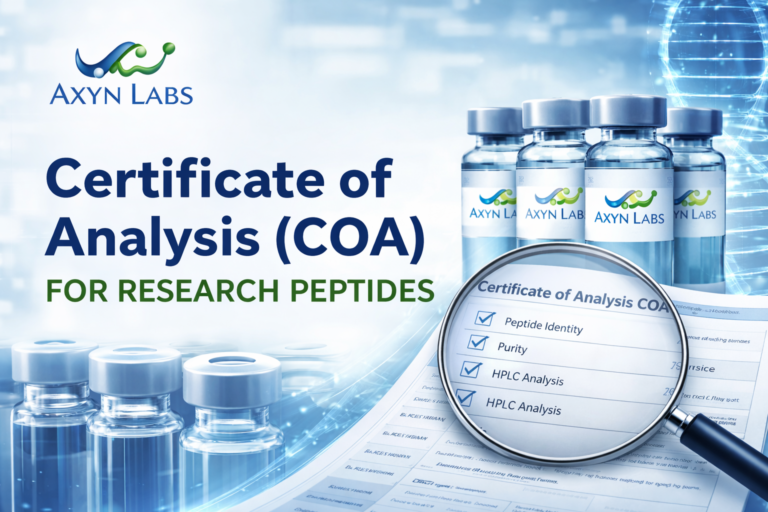
Certificates of Analysis (COAs) are used to verify purity and analytical testing results.
Common Forms of Research Peptides
Research peptides are commonly supplied in:
Lyophilized powder form
Vials for laboratory storage
Individually batch-numbered containers
Accompanied by third-party analytical documentation
Lyophilization enhances stability and extends shelf life when stored properly under recommended laboratory conditions.
The Role of Research Peptides in Scientific Investigation
Peptides continue to be studied in various controlled laboratory models due to their structural and signaling properties. Ongoing scientific investigation explores their interactions at the molecular and cellular level.
It is important to emphasize that research peptides are supplied solely to support laboratory research and must be handled in accordance with applicable regulations and safety standards.
Conclusion
Peptide compounds are synthetic amino acid sequences developed for scientific and laboratory investigation. Their controlled synthesis, purification, and testing allow researchers to explore molecular interactions in structured research environments.
When sourcing high-purity research peptides, batch transparency and proper documentation are critical factors in ensuring quality and reliability.
Disclaimer:
All products are intended strictly for laboratory research purposes only. Not for human consumption. Not for medical, diagnostic, or therapeutic use.