Understanding Peptide Purity: What Does 98%+ Mean?
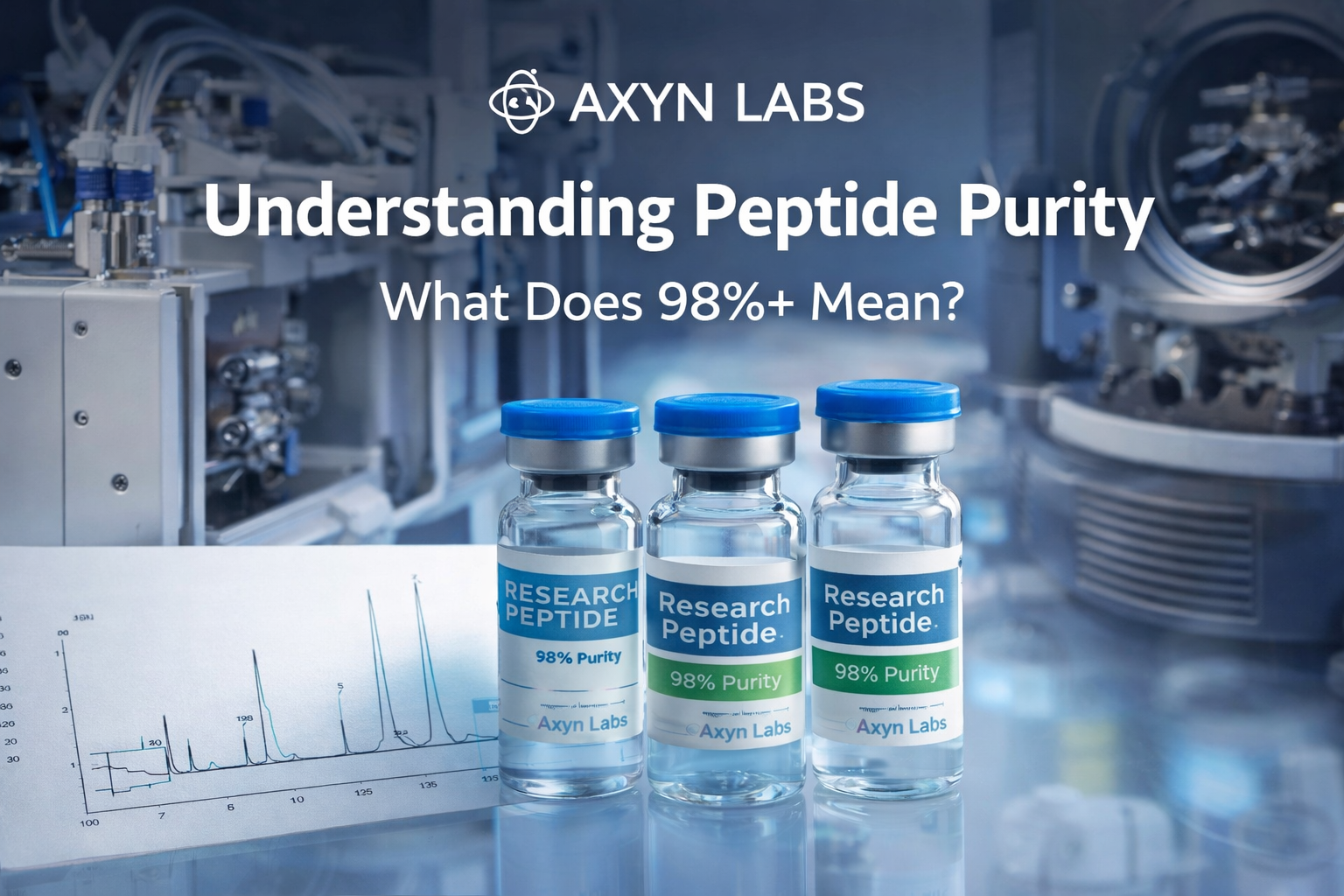
Understanding Peptide Purity: What Does 98%+ Mean?
Peptide purity is one of the most important factors in laboratory research. When sourcing research peptides, purity levels directly impact experimental reliability, reproducibility, and analytical accuracy.
Most laboratory-grade peptides are labeled with a purity percentage, often 98% or higher. However, understanding what that number actually represents is essential for researchers evaluating peptide quality.
What Does Peptide Purity Measure?
Peptide purity refers to the percentage of the desired amino acid sequence present in a sample compared to impurities or byproducts from synthesis.
For example:
98% purity means 98% of the sample contains the intended peptide sequence
The remaining 2% may consist of synthesis byproducts, truncated sequences, or minor chemical impurities
Higher purity levels reduce experimental variability and help ensure consistent research outcomes.
How Is Peptide Purity Determined?
Laboratories typically measure peptide purity using analytical techniques such as:
High-Performance Liquid Chromatography (HPLC)
Mass Spectrometry (MS)
HPLC separates compounds within a sample and measures the proportion of the target peptide relative to other components. Mass spectrometry confirms molecular weight and verifies sequence integrity.
These methods provide researchers with quantifiable data regarding composition and quality.
Why 98%+ Purity Is Common in Research Applications
In many laboratory environments, 98%+ purity is considered a strong benchmark for research use. While higher levels such as 99%+ may be available, the appropriate purity threshold depends on the specific research application.
Higher purity levels:
Reduce confounding variables
Improve experimental reproducibility
Support more reliable analytical results
Decrease interference from secondary compounds
For controlled laboratory investigation, consistent purity is often more important than marginal percentage differences.
The Role of Certificates of Analysis (COA)
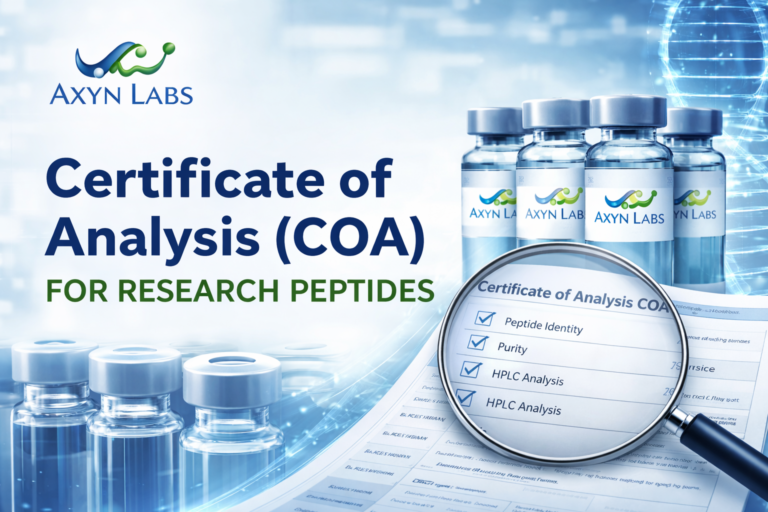
A Certificate of Analysis (COA) provides documented verification of a peptide’s purity and analytical testing results.
A typical COA may include:
Batch number
Purity percentage
HPLC chromatogram
Mass spectrometry data
Date of analysis
Batch transparency and third-party verification contribute to greater confidence in laboratory materials.
Factors That Influence Peptide Purity
Several factors affect final purity levels:
Quality of raw amino acids
Precision of solid-phase peptide synthesis
Effectiveness of purification methods
Storage and handling conditions
Improper storage, exposure to moisture, or temperature fluctuations may impact stability over time.
Selecting High-Purity Research Peptides
When evaluating peptide suppliers, researchers should consider:
Documented analytical testing
Transparent batch identification
Third-party verification when available
Consistent labeling and storage standards
High-purity research peptides accompanied by clear analytical documentation support controlled and reliable laboratory work.
Conclusion
Peptide purity represents the proportion of the intended amino acid sequence within a sample. In laboratory research, 98%+ purity is commonly used as a benchmark for quality and reliability.
Understanding how purity is measured and verified allows researchers to make informed decisions when sourcing laboratory-grade peptide compounds.
Disclaimer:
All products are intended strictly for laboratory research purposes only. Not for human consumption. Not for medical, diagnostic, or therapeutic use.