What Is a Certificate of Analysis (COA) for Research Peptides?
What Is a Certificate of Analysis (COA) for Research Peptides?
Research peptides are specialized compounds developed for laboratory investigation, and understanding what research peptides are is essential before evaluating their analytical documentation.When sourcing research peptides, product quality and analytical verification are critical. One of the most important documents accompanying laboratory-grade compounds is the Certificate of Analysis (COA). Understanding what a COA contains—and how to interpret it—helps ensure that peptides meet the purity and identification standards required for scientific research.
What Is a Certificate of Analysis?
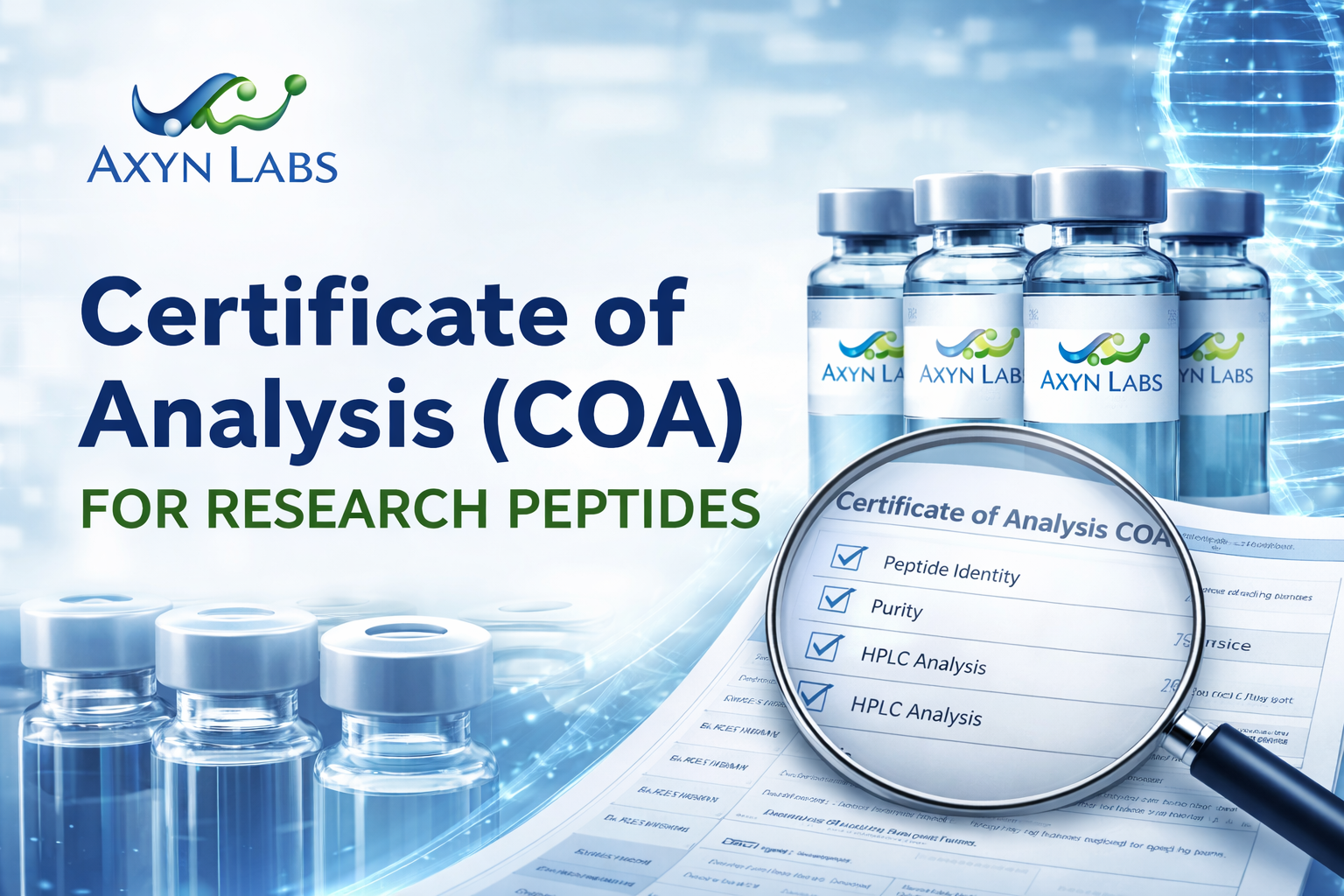
A Certificate of Analysis (COA) is a laboratory document that verifies the identity, purity, and analytical testing results of a specific batch of a compound.
For research peptides, a COA typically confirms:
Peptide identity
Purity percentage
Analytical testing method used
Batch number
Manufacturing or test date
Each batch of peptide should have its own COA. This ensures traceability and transparency in laboratory research environments.
Why COAs Matter in Laboratory Research
In scientific settings, reproducibility and reliability are essential. A COA provides documented evidence that a peptide has undergone analytical testing.
Without a COA:
Purity claims cannot be independently verified
Batch consistency cannot be confirmed
Traceability is limited
For this reason, reputable research suppliers provide batch-specific COAs for their peptides.
Key Components of a Peptide COA
Although formats may vary, most peptide COAs include:
1. Peptide Identification
The chemical name or sequence of the peptide is listed to confirm the compound being analyzed.
2. Purity Percentage
The purity percentage listed on a COA reflects analytical results, which are explained in greater detail in our guide to peptide purity. Purity is commonly measured using High-Performance Liquid Chromatography (HPLC). Results are often expressed as a percentage (e.g., 98% purity).
3. Analytical Method
The COA should specify the method used to determine purity and identity. Common techniques include:
HPLC (High-Performance Liquid Chromatography)
Mass Spectrometry (MS)
4. Batch or Lot Number
Each production run is assigned a unique batch number for tracking and verification.
5. Date of Analysis
This confirms when the testing was performed.
How to Read a COA
When reviewing a COA, researchers should verify:
The batch number matches the product received
The purity percentage aligns with specifications
The analytical method is clearly identified
The document appears complete and professionally formatted
High-quality suppliers prioritize transparency and documentation to support laboratory use.
COA vs. Marketing Claims
It is important to distinguish between analytical documentation and general product descriptions.
A COA is:
✔ A batch-specific laboratory document
✔ Based on analytical testing
✔ Intended for verification
It is not:
✘ A marketing statement
✘ A generalized purity claim without data
In laboratory research environments, documentation matters.
Explore Laboratory-Grade Peptides
Axyn Labs supplies high-purity research peptides supported by batch-specific Certificates of Analysis and analytical verification.
👉 View Available Research Peptides
Conclusion
A Certificate of Analysis (COA) is a fundamental component of responsible peptide sourcing. By verifying purity, identity, and analytical testing methods, a COA supports transparency and research integrity.
When selecting research peptides, reviewing the associated COA helps ensure that laboratory standards are maintained.
Learn More About Research Standards
To better understand how analytical verification supports laboratory work, explore our articles on research peptides and peptide purity.