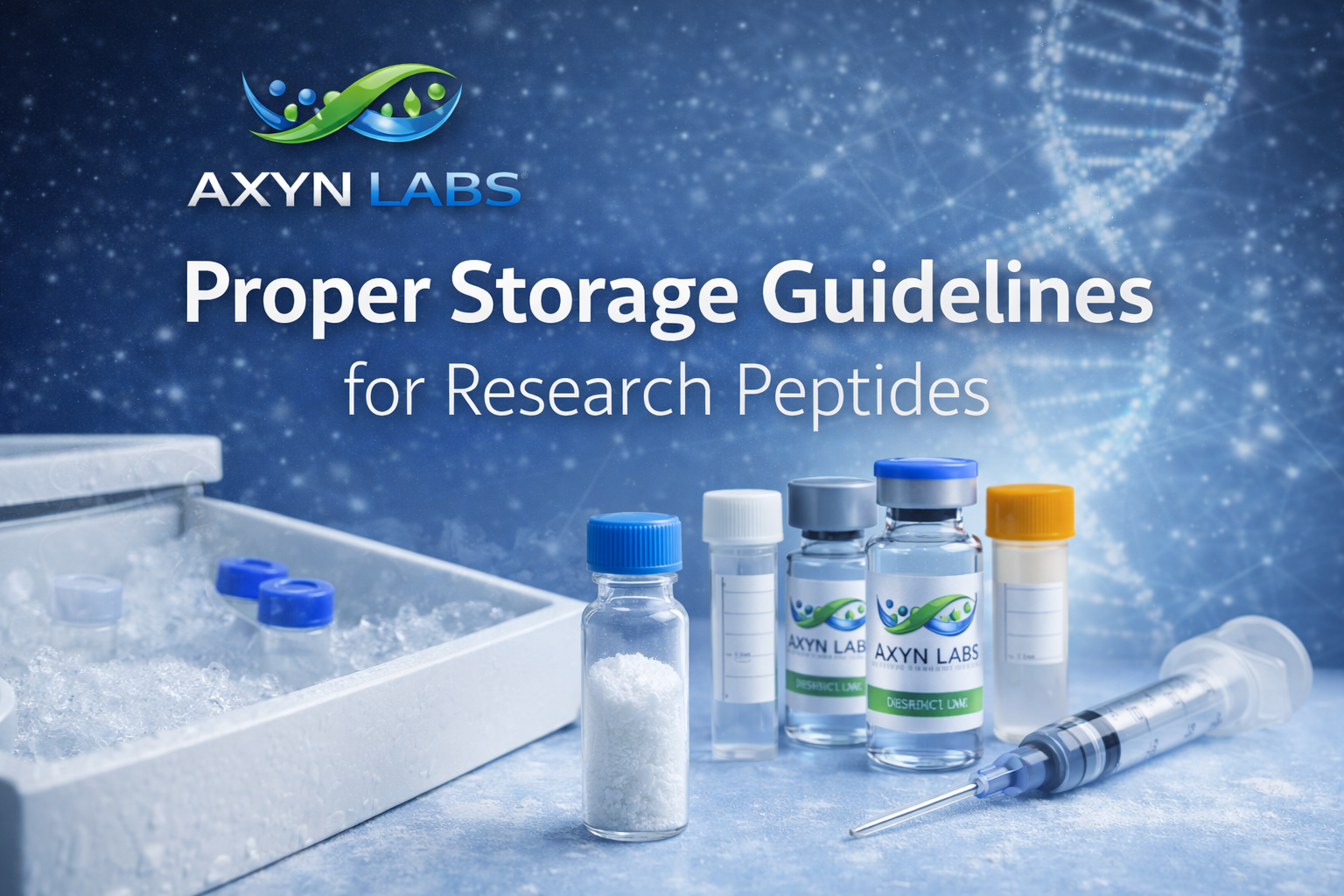
Proper Storage Guidelines for Research Peptides
Proper Storage Guidelines for Research Peptides
Introduction
Proper storage is essential for maintaining the stability and integrity of research peptides. Because peptides are sensitive biological compounds, improper storage conditions can lead to degradation, reduced purity, and unreliable experimental results.
Researchers who are new to laboratory peptide materials may benefit from first understanding what research peptides are and how they are used in scientific research.
Understanding how temperature, light exposure, moisture, and reconstitution affect peptide stability helps ensure that research materials maintain their intended structure and performance throughout laboratory use.
This guide explains best practices for storing research peptides, including refrigeration versus freezing, protection from light exposure, and considerations when reconstituting lyophilized peptides.
Refrigeration vs Freezing
Temperature plays a critical role in preserving peptide stability. Most research peptides are supplied in lyophilized (freeze-dried) form, which significantly increases their shelf life when stored correctly.
For short-term storage, peptides can typically be kept in a refrigerator between 2–8°C. However, for longer storage periods, freezing is often recommended.
General guidelines include:
• Short-term storage: 2–8°C refrigeration
• Long-term storage: −20°C or lower
• Avoid repeated freeze-thaw cycles
Repeated freezing and thawing can accelerate peptide degradation and should be minimized whenever possible.
Protecting Peptides from Light Exposure
Many peptides are sensitive to UV and visible light, which can contribute to chemical degradation over time.
Exposure to light may alter peptide structure or reduce stability, particularly for compounds that contain sensitive amino acid residues.
To reduce the risk of degradation:
• Store peptides in amber or opaque containers
• Keep vials inside original packaging when possible
• Limit exposure to direct laboratory lighting
Protecting peptides from light helps maintain structural integrity and analytical reliability.
Reconstitution Considerations
Lyophilized peptides are often reconstituted using sterile water or appropriate laboratory buffers prior to use. Once reconstituted, peptides become more vulnerable to degradation.
Important considerations include:
• Use sterile laboratory-grade solvents
• Prepare only the amount needed for immediate research use
• Store reconstituted solutions at appropriate temperatures
Many laboratories divide reconstituted peptides into small aliquots to prevent repeated freeze-thaw cycles that may compromise stability.
Avoiding Peptide Degradation
Several environmental factors can contribute to peptide degradation if storage conditions are not controlled.
These factors include:
• Temperature fluctuations
• Moisture exposure
• Oxidation from air contact
• Repeated freeze-thaw cycles
Maintaining stable storage conditions and minimizing environmental exposure helps preserve peptide purity and analytical reliability throughout research use.
Laboratories conducting peptide research should ensure that materials are sourced from suppliers that provide detailed analytical verification and proper handling documentation. Researchers can explore laboratory-grade research peptides available through Axyn Labs to support controlled scientific investigation.
Conclusion
Proper storage is critical for preserving the stability, purity, and reliability of research peptides. By controlling temperature, limiting light exposure, and carefully managing reconstitution procedures, laboratories can maintain the integrity of peptide materials used in scientific investigation.
Following established storage guidelines helps ensure that research peptides remain suitable for laboratory analysis and experimental research.